

MENU


CLIENT ACCESS
MENU
CLIENT ACCESS

Coffee & Cap
Rates Podcast
8/15/2023: Episode 79:
Host
Shimon Shkury
President and Founder
Featuring
Victor Sozio
Founding Partner
Featuring
Matthew Dzbanek
Senior Director - Capital Services
HOST
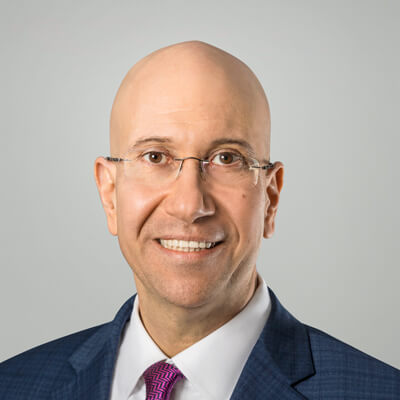
Shimon Shkury
President and Founder
Featuring

Victor Sozio
Founding Partner
Featuring

Matthew Dzbanek
Senior Director - Capital Services
*The following text has been automatically transcribed and may contain minor errors. For original content, listen to the podcast episode
Shimon Shkury: Hi everyone, I'm Simone Shkury with Ariel Property Advisors and today I have two esteemed people here with me. We're gonna talk about the multi-family market in New York City and the past quarter, past six months. What we're gonna see moving forward. I have my partner Victor Sozio and our senior director in Capital Services, Matt Dzbanek. Hey Vic, how you doing? Hey Matt.
Victor Sozio: I'm good. Hello Shimon.
Matthew Dzbanek: Hey Shimon, how you doing?
Shimon Shkury: Doing well, thank you. So we are coming out of a really good quarter for multifamily. The second quarter has been a lot more robust compared to the first only $1.1 billion of transactions in the first quarter, 3.9 in this second and and Vic. What did we see here in multifamily in the second quarter in general in the past six months?
Victor Sozio: So we saw a slight uptick in transaction volume up to 295 transactions, but what was really great to see is overall dollar volume in the second quarter was approaching $4 billion. We have it at about 3.91 and that is a pretty robust quarter of multifamily, especially following a very slow first quarter. And amongst all the continued volatility, it was really great to see what really amounts to an above average multifamily dollar volume in the second quarter. What's interesting is that, and it's really no surprise, but the two asset classes that continue to be in the most demand are free market assets or predominantly free market properties and affordable housing. With a capital A. Both of those segments or product types are accounted for about 40% each totaling over 80% of the overall dollar volume. And the balance is really the rent stabilized properties which continue to lag and account for a much smaller percentage of the overall volume.
Shimon Shkury: Thank you for that overview. And you mentioned that we are seeing some challenges and and that's one of them is the cost of capital and the growth in interest rates and as a result of that we've seen a very low volume in the first quarter, high volume in the second. Matt, what happened in the lending environment in the past six months that you're seeing as a challenge or as an opportunity?
Matthew Dzbanek: Great question. So I think there's a few things happening right now, right? One of the biggest things that we all experienced were a number of banks having to close their doors for good. This caused a lot of uncertainty and unrest in the market. We sort of saw that end of Q one, beginning of Q two and I think at that point, once that dust settled, the lenders who were still open looked to put money out or looking to make deals and wanna continue to grow to the portfolio. The rollercoaster for rates, you know, we sort of saw rates trend upwards towards the end of the first quarter and then they dropped pretty significantly close to a hundred basis points by the beginning of the second quarter, which made turns much more attractive, which made transactions a little bit more favorable.
Shimon Shkury: That's great, thank you. And and you know what's interesting is that what Vic said was that about 40 plus percent of the transactions to place in affordable housing, 40 plus in free market, the balance, which is a lot less, clearly is in rent stabilizing. You look at the free market world, it's because of the fundamentals, the rent fundamentals are robust and they grew and that allowed for pretty much every single investor to be in that with institutions, private clients and overseas investors. The lack of housing is also contributing to the pressure on fundamentals and rent. But you know what the super interesting product type that you do a lot of business then and that's the affordable housing. And then we also have the rent stabilized housing, which we also do a tremendous amount of work in. Why was the affordable housing so in demand? What did we see there in the past quarter or six months of the year?
Victor Sozio: Well, when we look at what happened in the second quarter and, and we start to drill into the numbers, part of why it accounted for such a large percentage is that there was a large purchase of Omni's portfolio by Nuveen companies. They purchased essentially all of their New York properties predominantly project-based section A about close to 6,000 units and that was almost a $1 billion transaction in itself. We also had some of the larger transactions including the Sea Park portfolio in Coney Island and a preservation deal we did in Harlem and the Bronx with Goldman Sachs. And what we're seeing Shimon is that not only does it continue to attract capital for CRA purposes or capital that's designated for affordable housing, whether it's mission driven or whatever the case might be, but there's also still tools to work with to add value while still also achieving the objectives of the respective agencies that govern and restrict these properties. So when you look at C Park or the Goldman portfolio purchase, both of those transactions involved, extending affordability, getting new tax benefits, working with the agencies to figure out the parameters about how to preserve those assets and even unlocking certain business plans that can be utilized by placing some voucher tenants in there and lowering some of the AMI bands. So there are different value add tools that can be implemented even when you think about both project based section A or even rent stabilized properties that are governed by these reg agreements. There's been recent federal and state legislation, you know, some of it that is still being processed or evolving to understand what the standards of applying them can be. But you know, some of that legislation could be directly applied to some of these projects and portfolios and also help to add value while still maintaining the affordability of the assets. So the fact that these projects still have that type of opportunity, that type of business plan on top of the depth of the equity that's in search for it, I think has really resulted in this type of demand.
Shimon Shkury: That's great. And you know, just to be very clear on, on C Park, you actually led that transaction and our company sold it, including also the Goldman Sachs deal that you sold in Arlington $45 million. So, and now we having the inventory about, I guess about 5,000 units that hopefully will get into a contract and sell sometime next year, but there's a tremendous amount of capital mission-driven capital that you, you stated that we're seeing here for that product type and a tremendous amount of also ability to add some value in addition to the mission of preserving this kind of affordability throughout New York City. And that's for affordable housing and capital A?
Victor Sozio: Yes. That's for affordable. And you, you also touched on rent stabilized before and I, I don't know if I answered that question yet.
Shimon Shkury: Correct, You should.
Matthew Dzbanek: That's a little bit of a different story and it's probably no shock to hear that owners of these properties have felt beaten up over the last few years when you consider the legislation in 2019, which was a major paradigm shift and the continued rise of expenses, you know, insurance has become an absolute nightmare and other factors. So it's no surprise that that's accounting for less of the volume and really the profile of those buyers is different than the other two set product types that we're discussing. These tend to be more longer term outlook type of buyers, but the data shows that pricing is in line with maybe around 2014. But if you ask us, and to your point, we have a ton of these units on the market right now, thousands and thousands and some of the pricing metrics that we're seeing, it's the highest cap rate and lowest GRM's that I've seen in almost two decades, right? We're talking about GRM's that are less than six in some cases, cap rates that are consistently above seven. So what will be interesting to see is how many groups view that as a long-term opportunity knowing that the short-term probably carries some risk and you know, potentially minimal cash flow because of all these factors that we mentioned. We didn't even touch on collections and you know, all that other stuff. So, but you know that's gonna be interesting to see given how dramatically different some of these pricing metrics have become.
Shimon Shkury: Yeah, I love what you did with this Vic because you really took the affordable world with a capital A and said this is one segment to be clear, very, very different than just rent stabilized housing. These are two different animals, two different capital sources and also several other financing sources. Lenders lending on this differently portable, mostly agency on the rent stabilized, completely other balance sheet lenders and so on. And with that I wanted to go to Matt and ask him who's actually lending today. So again, on the affordable world, Vic knows that it's going to be mostly agency, but on the unaffordable world who's lending today? What do you see there? How does the work?
Matthew Dzbanek: So in that side of the world we're really seeing a lot more balance sheet lenders come to the table and what we're noticing a trend of, it's a lot of the guys who weren't as active over the past 10 years who maybe you know, one of the top 5, 10, 15 lenders in the market who have a lot of bandwidth who are looking for an opportunity to fill a bucket with lower leverage products due to where rates are and able to scoop up some business and really win new clients. On the debt fund side, we're seeing a lot of bridge and debt fund lenders in this space. There seems to be a lot of liquidity for their type of money. You know, they're giving a lot of shorter term loans to get to people who are really being affected by their debt service coverage ratio and just need one to two years sort of let market reset around them and refinance or sell out into a better market.
Shimon Shkury: Yeah, I think you, you've done a a recent transaction I thought that, that you can talk to.
Matthew Dzbanek: Yeah, so we're closing on a rent stabilized deal next week. Is it gonna be a cash neutral transaction? Luckily we were able to lock the rate about 45 days ago in the high five, you know, had that rate floated and where we sit now that would be somewhere probably in the high sixes and would've cash constrained him and forced him to do a cash in. So you know, especially in these rent stabilized deals, a lot of it is gonna be very rate driven.
Shimon Shkury: Thank you. And so let's wrap it up Vic, what do you think we're gonna see in the next six to 12 months in multifamily?
Victor Sozio: I think it's gonna be an interesting quarter. I suspect that, you know, volume will still be hired in the first quarter. I'm not so sure it'll be as much as the second quarter given some of the, the larger transactions that occurred. But I, I think it'll be somewhat in line with a typical year. But you know, what we do know is gonna be hitting the streets is FBI's C's marketing of the signature note portfolio and that's gonna be a very interesting and intriguing dynamic to see how that affects the broader market. You know, a lot of those are multi-family properties in New York City. There is still commercial and retail, you know, there is a good portion of rent stabilized assets there too. So you know, a lot of guys will be looking at that and you know, potentially trying to correlate values to these properties based on what's happening and what kind of discounts are given on that note package. So that's gonna be I think an interesting thing to watch play out in this quarter.
Shimon Shkury: That's awesome, thank you. And and I think you're absolutely right and I think there's this whole thing in addition to that of mortgage ities in general that you and I are seeing coming from clients that need help with selling because they don't want to necessarily refinance or come up with the more equity. So, so that's something that I believe you and I are doing a lot in terms of the valuation process and the front of the pipeline that we have. And Matt, anything that you see from a financing perspective?
Matthew Dzbanek: Yeah, I expect rates to remain fairly high in the short term as the market sort of settles from everything that's happened in the past quarter. We are seeing a lot of positive metrics come in macroeconomically. So we are feeling optimistic and I do hope in maybe not the two distant future, we start to see that coming down and normalize more lenders come back into the market creating uh, greater competition but you know, we are still seeing activity so we're excited for the future.
Shimon Shkury: Thank you Vic, thank you so much for taking the time. I know you're super busy. So that's Matt, thank you so much for doing this with us here on crossing cap rates and I hope everybody enjoyed this and please you can see our reports as well and see all the data there. Thank you so much.



©2026 ARIEL PROPERTY ADVISORS