

MENU


CLIENT ACCESS
MENU
CLIENT ACCESS
Originally Published in

March 13, 2026
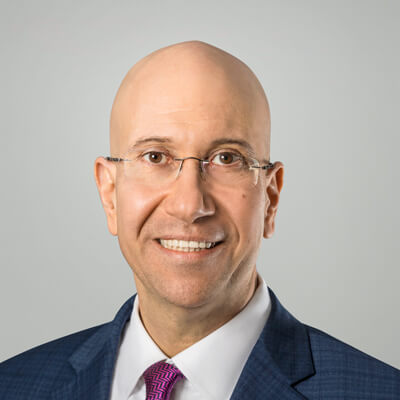
By Shimon Shkury, Ariel Property Advisors
Read The Article on Forbes
Originally Published in Forbes | March 13, 2026 | By Shimon Shkury at Ariel Property Advisors
In 2025, New York City real estate investors followed the Rule of Three, looking for growing fundamentals, basis and value, and policy incentives or misalignments. This rule was evident in New York City’s multifamily market in 2025, which saw sales of free market buildings account for 66% of the $8.91 billion in dollar volume and 48% of the 1,188 transactions. Rent stabilized asset sales followed in deal frequency (46%) but trailed in dollar volume (20%), while affordable housing rounded out the market with 14% of the volume and 6% of transactions, according to Ariel Property Advisors’ Multifamily Year In Review New York City 2025.
The numbers tell the story. Capital rewarded free market housing with rising valuations, affordable housing remained active in transactions that support public-private alignment and rent-stabilized assets traded at steep discounts as NOI eroded under policy misalignment, collection burdens and cost pressures. Market rate and regulated housing each account for approximately 1 million of the City’s 2.3 million rental units.
Milton Friedman famously argued that policies should be judged by their results, not their intentions. In the landscape of New York City rent stabilized assets, this wisdom is being tested in real time.
The Housing Stability and Tenant Protection Act (HSTPA) of 2019 was intended to protect tenants, but instead it has created a challenging environment for owners of rent stabilized buildings and renters alike.
HSTPA severely restricts rent adjustments even upon vacancy and, therefore, the economic incentive to renovate and lease these units has disappeared. This policy misalignment has resulted in a warehousing crisis in which rent-stabilized units are currently sitting vacant and off the market. Depending on the methodology, estimates of vacant rent-stabilized apartments in New York City range from roughly 26,000 units to as many as 50,000 units according to industry researchers and policy analysts.
The current state of the rent-stabilized market is defined by a perfect storm:

New York City's rent-stabilized market has experienced a perfect storm of rising expenses and stagnant rents. Ariel Property Advisors
Tenants. As building economics deteriorate, owners lack the ability to reinvest. Repairs are deferred, renovations become impossible, and financially distressed buildings increasingly fall into physical distress—leaving tenants with declining housing quality.
The City. Units are taken off the market and may remain vacant because renovation costs cannot be supported by legal rents. At the same time, the housing stock is not properly preserved, creating long‑term deterioration. Lower building income also reduces property valuations and property tax revenue, while fewer transactions and financings further shrink tax collections.
Landlords and valuations. Investors and lenders increasingly avoid rent‑stabilized assets, leading to a sharp decline in property values. In 2025, average pricing for buildings with 75%+ rent stabilized units fell across all submarkets: Manhattan −61%, Northern Manhattan −47%, the Bronx −46%, Queens −26%, and Brooklyn −28%, with some distressed trades occurring 70–90% below pre‑HSTPA valuations.
With many buildings now underwater, owners often cannot borrow for improvements or service debt. Some are forced to sell, while others choose to exit the sector entirely. This trend is illustrated by the 5,150‑unit Pinnacle portfolio bankruptcy sale, which a judge approved for $451 million—about 60% below its 2019 peak—and Related, which chose to sell a 2,021‑unit Bronx portfolio for $189.5 million, roughly a 24% discount. Buyers are largely attracted by the low basis and the possibility that the housing policy may eventually change.

Examples of falling values for rent stabilized buildings across New York City. Ariel Property Advisors
Where rent stabilized buildings struggle, affordable housing—driven by mission-oriented capital and government partnerships—thrives. However, there’s a caveat. In order to thrive, the capital, city, state and federal government need to be in sync, aligned and agree to preserve housing.
Manhattan multifamily investment sales activity remained stable in 2025 compared to 2024 with dollar volume of $3.44 billion (1% decrease) across 185 transactions (2% decrease). Properties with 50% or more free market units represented 94% of Manhattan dollar volume and more than 78% of transaction activity, indicating a sustained market preference for assets with limited regulatory constraints. Of New York City’s 2.3 million rental units, approximately 1 million are free market and 1 million are regulated.
An example of this policy alignment in 2025 was Black Iris Capital’s $109.5 million acquisition of the LeFrak Organization’s 755-unit South Queens Multifamily Portfolio, which pivoted from a rent stabilized asset into an affordable portfolio. Upon closing, the nine Richmond Hill properties totaling 721,456 square feet were designated for long-term affordability by leveraging the City’s Article 11 tax benefit. Additionally, all nine buildings are under the Section/Amendment 610, which will provide ownership with an opportunity to collect rents above the legal rent.
In another significant transaction, Ariel Property Advisors arranged the acquisition and preservation of Ocean Park, a 602-unit, affordable housing complex in Far Rockaway, Queens, to Tredway for $88 million. Tredway negotiated a new regulatory agreement with the Department of Housing Preservation & Development (HPD), entering all units into rent stabilization and extending the affordability of 423 units at 60% area median income (AMI) and 179 units at 80% AMI income, preventing substantial imminent rent increases. The affordable and mixed-income real estate developer also committed $15 million to a substantial rehabilitation plan for the asset.
Finally, the $3.15 billion refinancing of Stuyvesant Town and Peter Cooper Village was a powerful signal of institutional conviction and lender confidence in large-scale, policy-aligned housing. By securing a Wells Fargo mortgage that exceeds the original 2015 capital stack, Blackstone chose to double down on the 11,200-unit complex rather than exit, marking a significant “fork in the road“ for the firm. This transaction proves that even in a high-interest-rate environment, major lenders like Wells Fargo still view durable, regulated cash flows as highly financeable assets when the underlying policy structure remains stable.

The $3.15 billion refinancing of Stuyvesant Town and Peter Cooper Village was a powerful signal of institutional conviction and lender confidence in large-scale, policy-aligned housing. Ariel Property Advisors
In free market multifamily, fundamentals were strong in 2025, values were still below peak, buyer demand high, and many owners chose to hold instead of selling, bringing in fresh equity through recapitalizations and partial-interest transactions.
In Manhattan, the vacancy rate was 1.89%, remaining below 2% for twelve consecutive months. Median free market rent hit a record high of $4,995, up 11% year-over-year.
Valuations for free market properties rose 6% last year but were still about 18% below the 2017 peak, which attracted investors in several categories–partial interest and strategic recapitalizations, luxury and legacy buildings and tax class protected assets.

Valuations for free market properties in New York City rose 6% last year but were still about 18% below the 2017 peak. Ariel Property Advisors
A prime example of the institutional appetite for high-quality cash flowing, multifamily assets was Macquarie Group’s acquisition of a minority stake (under 50% and estimated at $392 million) in the four-building, 1,471 unit Waterside Plaza from Brookfield. In addition, Steiner NYC took full control of The Hub at 333 Schermerhorn in Brooklyn by buying out J.P. Morgan’s stake for roughly $260 million in a deal that included $62.5 million in preferred equity from Meadow Partners.
Significant free market luxury and legacy sales in Manhattan included J.P. Morgan Asset Management’s acquisition of Riverbank West, a 418-unit predominantly deregulated luxury rental at 560 West 43rd Street for $230 million ($627/SF), and A&E Real Estate’s purchase of Rivers Bend, a 179-unit elevator building at 501 East 87th Street for $116.5 million ($576/SF) in a value-add repositioning of a predominantly deregulated asset.
Tax-class protected and private capital trades also continued to generate demand. Examples included the Sabet Group’s acquisition of a prime Upper East Side mixed-use asset at 19 East 71st Street for $10 million ($986/SF) in an all-cash transaction, and 150 North 9th Street, a 7-unit Williamsburg walk-up that a Japanese investor Mantomi purchased for $8.5 million ($1,545/SF), up 80% from the 2022 price of $4.7 million.

Examples of owners that chose to hold onto their assets instead of selling. Ariel Property Advisors
The multifamily market in New York is currently a study in contrasts. We expect to see continued activity in the affordable housing sector as more owners seek the stability of government partnerships. Meanwhile, the free market remains the primary engine for growth, driven by a “buy-and-hold“ mentality among those who recognize the long-term value of New York City.
Despite the mounting financial pressure on rent-stabilized assets, however, there are no legislative or regulatory tailwinds providing relief for properties in distress. Instead Mayor Mamdani has promised rent freezes and “rental ripoff” hearings.
One solution would be to structure a policy like the sale of the LeFrak Organization’s South Queens Multifamily Portfolio, which pivoted from a rent-stabilized asset to an affordable portfolio by leveraging the City’s Article 11 tax benefit and 610 Amendment.
Another immediate, cost-effective and impactful policy would be to return to pre-HSTPA rules and allow for vacancy decontrol. By allowing rents to reset to market rates after long-term tenancies conclude, the City could restore the private investment necessary to modernize aging housing stock. This would deliver an estimated 50,000 vacant rent stabilized units to the market fairly quickly.
Finally, a more efficient and streamlined Housing Court would provide owners with the certainty needed to re-lease units confidently after resolving cases involving nonpayment or chronic lease violations.
Content for this article was taken from Ariel Property Advisors’ Multifamily Year In Review New York City 2025 and a presentation I made at our firm’s Coffee & Cap Rates event on February 5, 2026. To view the full presentation NYC Investment Sales: Strong Demand Amid Policy Uncertainty, please click here. To access Ariel’s research reports, please click here. A podcast about the multifamily market can be accessed below.

Shimon Shkury, Victor Sozio and Matt Swerdlow provide insights into New York City's multifamily market on this Coffee & Cap Rates podcast. Ariel Property Advisors
More information is available from Shimon Shkury at 212.544.9500 ext.11 or e-mail sshkury@arielpa.com.


©2026 ARIEL PROPERTY ADVISORS