

MENU


CLIENT ACCESS
MENU
CLIENT ACCESS
Originally Published in

August 13, 2026
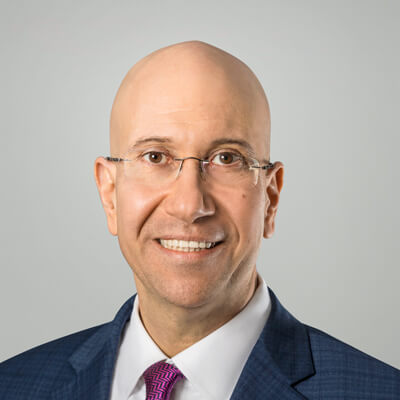
By Shimon Shkury, Ariel Property Advisors
Read The Article on Forbes
Originally Published in Forbes | August 13, 2026 | By Shimon Shkury at Ariel Property Advisors
A few months ago, a friend who's also in real estate called me up and said, “Shimon, what are you still doing in New York City? You should come to Miami. In Florida, they like business here.”
And you know what? He's not alone
When you listen to the noise, you might think that New York City doesn't offer opportunities anymore. But when you look at the numbers, something very different emerges.
We had $17.38 billion in investment property sales in New York City in the first six months of 2026, Ariel’s research shows. That's a 37% increase year over year. So capital is here, but it's selective
In each asset class capital is investing in reset valuations, fundamentals that are growing and in policy alignments. When those don't exist, capital is looking for distress and a lower basis.

New York City investment property sales totaled $17.38 billion in the first six months of 2026, a 37% increase year over year.
In the multifamily asset class, New York City saw growth of 21% year over year to $4.95 billion.
The multifamily sector is divided into three distinct asset classes—free market, rent-stabilized and affordable housing—each exhibiting unique market dynamics. In the first half of the year, free-market properties dominated , accounting for 69% ($3.39 billion) of the total multifamily sales volume. Rent-stabilized assets followed at 22% ($1.08 billion), while affordable housing comprised the remaining 9% ($480 million).
Most of the transactions in the first half of the year came from free market multifamily because investors are looking for yesterday's pricing with today's fundamentals. The values of free market buildings today, on average, are about 16% below what they were at peak in 2017, but rents have grown by almost 60% in the past six years. That's a very compelling investment thesis for institutional investors.
One of the institutional transactions that took place earlier this year was the Columbus Square Portfolio sale. MetLife and UDR bought this deal in 2012, and MetLife sold their stake to Carmel Partners earlier this year for $241.3 million, a 23% discount. It's the same asset, three different investors, three different decisions. Carmel Partners entered into a discounted deal while UDR stayed for the upside potential and accretive debt.
Institutions weren't the only ones investing. We also saw demand from private and international investors for deregulated buildings, value-add and smaller tax-class protected assets.
So, when it comes to free market multifamily, we have a deep bench of investors. It’s all about the recent valuations and growing fundamentals.

New York City saw demand for free market multifamily buildings in the first six months of 2026 from institutional, private and international investors.
Affordable housing is very different. There, it's all about the private-public alignment, and there are many different iterations and asset classes within affordable housing.
One that is more aligned than others is Project-based Section 8, which drove a substantial portion of the $480 million in affordable housing sales in the first six months of the year. In this category, the lower rents tenants pay are complemented by rent subsidies, property tax abatements and the opportunity for agency and HUD financing. The mission to provide quality housing for lower-income families is coupled with the ability of investors to get a return.
Significant Project-based Section 8 transactions in 1H 2026 included two sales brokered by Ariel Property Advisors: Manhattan Valley Apartments for $75 million and Hudson View II & III for $45 million. Additionally, Related Companies traded 210 Sherman Avenue to Jonathan Rose Companies for $50.6 million.
Project-based Section 8 has held its value far better than rent-stabilized housing over the past decade, performing more like free-market multifamily. That is not accidental; it reflects a better alignment between affordability, property-level economics and investor returns, which encourages continued investment and preservation.

In 1H 2026, New York City saw a number of Project-based Section 8 transactions including the Manhattan Valley Apartments, 210 Sherman Avenue and Hudson View II & III.
Where are we seeing misalignment? In rent-stabilized multifamily. There, we have rents that are low with no ability to increase them through subsidies or tax abatements. In fact, the Rent Guidelines Board voted for zero percent growth on one and two-year rent stabilized leases just a few weeks ago.
What does that do to these assets? In the past six years, expenses have grown two and a half times more than rents, eroding net operating income and resulting in financial and valuation distress.

In the past six years, expenses for rent stabilized properties have grown two and a half times more than rents, eroding net operating income and resulting in financial, valuation and physical distress.
Beyond the financial pressure, this dynamic is driving significant physical distress across properties. When rent-stabilized owners have a vacant unit, they must think about whether it’s feasible to re-lease the apartment. Many have concluded it isn’t. As a result, more than 57,000 rent stabilized units are sitting vacant, according to a letter sent by the state’s Division of Homes and Community Renewal to the RGB. That’s about 6% of the total million rent stabilized units in New York City.
What does that do to valuations? In the first half of the year, rent stabilized buildings traded at an average discount of 63%. One of these deals was the Pinnacle Group Multifamily Portfolio that sold out of bankruptcy for $451 million, or 60% below its 2018 valuation. Long-term families like the Lefrak Organization are exiting the rent-stabilized market as well.

Many long time owners of rent stabilized assets are exiting the market.
There are a lot of challenges in the rent-stabilized sector, and the city and state have two main tools available to fix it:
Maintaining the status quo will just accelerate financial and physical distress. Rent-stabilized housing is all about misalignment. It's a structural issue that we need to solve as a city.

There are a lot of challenges in the rent-stabilized sector, but the city and state have the power to fix it.
The office sector did extremely well in the first six months of 2026, increasing by 31% year-over-year to $3.76 billion.
In Class A, it's all about the fundamentals. Some Midtown office leases are above the $90 per square foot average to above $300 per square foot.
In the past six months alone, 23 million square feet were leased in class A office buildings to high-end law firms, financial institutions and tech companies, with some of these being renewals, according to Colliers.

In the past six months alone, 23 million square feet were leased in class A office buildings to high-end law firms, financial institutions and tech companies, according to Colliers.
If you wonder why, ask the tenants. One senior partner in a major law firm told me this: “I get into the subway and go right into my Hudson Yards building to go to the gym, then go to my office to have lunch with one of my clients. And that's all within the same campus.”
The goal is no longer just providing desk space but delivering a hospitality experience that attracts and retains top talent. This tenant demand is exactly what is driving investment.
SL Green’s purchase of Park Avenue Tower from the Blackstone Group for $730 million, or $1,176/SF, exemplifies this trend. Manhattan’s largest commercial office landlord bought it at around the same value Blackstone acquired it for 10 years ago, but with the conviction that they can reposition it and enjoy the high fundamentals. So here again, what we have is the same asset, two different investors, sophisticated investors, and two different decisions.
Strong performance in Class A office space is spilling over into Class B. Improving fundamentals have driven rent growth and sparked a strategic repositioning of these assets to Class B+ and A.
The final office category, office-to-residential conversions, falls under development, which surged 61% year over year to $3.88 billion in the first half of 2026.
Development is about policy alignment and office to residential tells that story.
101 Greenwich is one of 17 office buildings traded in the first six months of the year that will be converted to residential, and one of 65 conversions started in the past two years. In fact, the city has about 16,000 units in the pipeline. Why is that? Good policy.
The 467m tax abatement enables developers to make economic sense of these conversions and allows the city to receive 25% of these units as affordable. Good alignment.
Good alignment also existed in the prior tax abatement called 421a. We saw Tavros Capital Partners buying a vested 421a site at 304 Pearl Street for $143 million that will result in 600 new housing units.
Do we still have alignment in ground up development when it comes to tax abatements? We do. With the 485x program, we've seen 112 different lots trade. Most of them, very similar to 444 Carroll Street, a site Ariel sold earlier this year for $19 million and where a 99-unit building is planned. Why 99 units? Because when you develop above 99 units, the 485x tax abatement doesn't work economically.
The city needs to produce about 60,000 units per year to catch up with the lack of supply. We're producing maybe half of that. And, when you consider that we're losing around 10,000 rent stabilized units every year because of regulations, we are only netting about a third of what we need.
We need to think about policies that encourage more development in the city to increase the supply, thereby lowering free market rents.

State and local policies have encouraged new residential development throughout New York City.
Going forward, what should we look for?
Getting back to my Miami friend and his question about whether I should leave New York City.
My answer is a resounding NO. We can listen to the noise, but when we look at the capital, we see that there are investments but they're selective and they're about fundamentals and policy alignment.
So, I choose to follow the capital rather than follow the noise.
Content for this article was taken from Shimon Shkury’s presentation at Coffee & Cap Rates on July 30, 2026.

Click the image above to view Shimon Shkury's presentation at Coffee & Cap Rates on July 30, 2026.
More information is available from Shimon Shkury at 212.544.9500 ext.11 or e-mail sshkury@arielpa.com.


©2026 ARIEL PROPERTY ADVISORS